Flagship product case study

AFC Suite

Designing a modular anti-financial-crime product system — and the human-owned, AI-assisted operating model used to shape, implement and validate it.

Product strategyWorkflow & UX directionPlatform architectureResponsible AIDesign-to-engineering

Financial-crime operations combine large queues, complex rules, fragmented evidence, regulated decisions and high expectations for auditability. AFC Suite treats that challenge as a product system, not a collection of disconnected screens.

The suite brings focused runtime experiences together on shared foundations for identity, tenancy, product access, workflow, configuration governance, provider patterns and audit. Each product stream owns its domain language and operating decisions while reusing consistent platform controls.

3Active product streams: AML, TBML and UBO
5Specialised front-end applications in the repository
1Shared platform foundation and API host
HumanAcceptance and release authority
Portfolio disclosure. All screens use synthetic demonstration data. Customer identities, production configurations, security details and confidential implementation information are excluded.
My contribution combined product and AI strategy leadership, workflow and UX direction, architecture shaping and delivery governance. It did not replace engineering accountability.

Kenny · Product and AI strategy lead

  • Owned product intent, priorities and non-goals
  • Translated financial-crime workflows into product and UX direction
  • Shaped platform boundaries and architecture decisions
  • Set quality gates, caveats and stop conditions
  • Retained acceptance, deferral and release authority

Developer · Engineering authority

  • Owned implementation quality and technical judgement
  • Protected security, tenant isolation and maintainability
  • Ran builds, tests and browser validation
  • Diagnosed root causes and produced evidence
  • Kept implementation and technical documentation aligned

AI systems · Bounded leverage

  • ChatGPT for product, architecture and review reasoning
  • Codex for complex cross-file implementation and validation
  • GitHub Copilot for bounded edits and code assistance
  • Outputs treated as untrusted until reviewed
  • No AI system held release authority
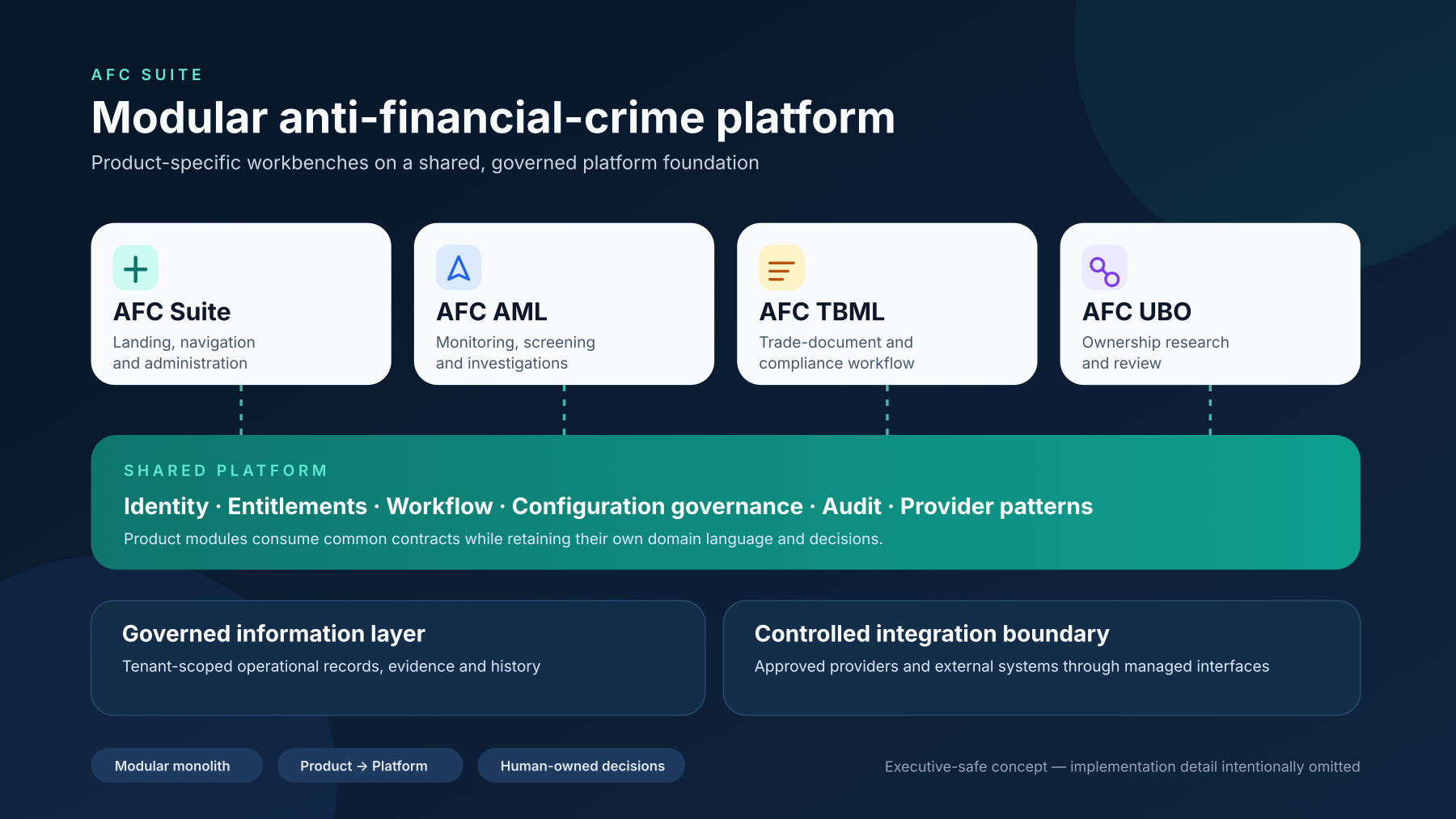
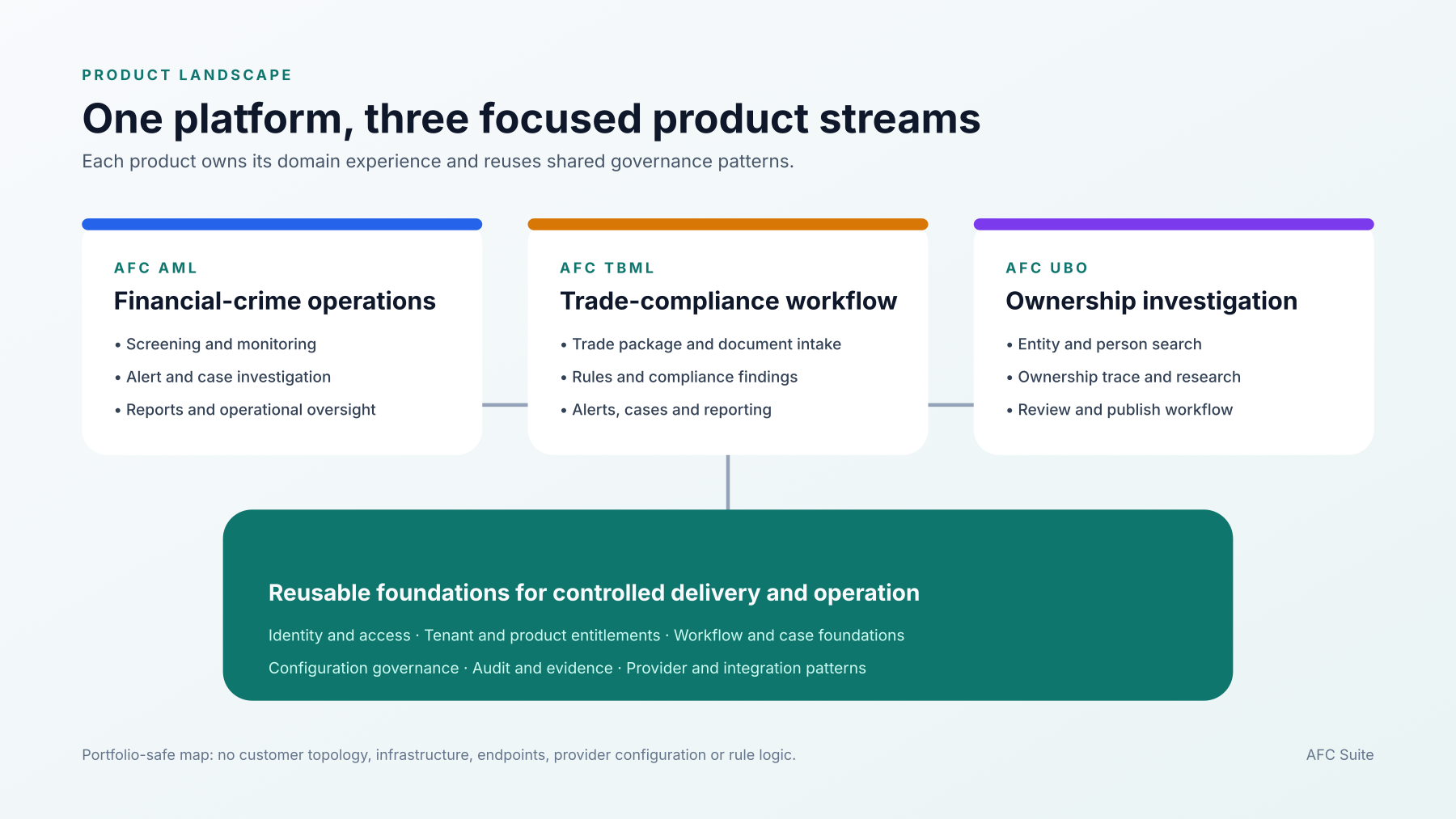
AFC Suite module map showing AML, TBML and UBO on shared platform capabilities
Portfolio-safe product map. Implementation detail and customer configuration are intentionally omitted.

AFC AML

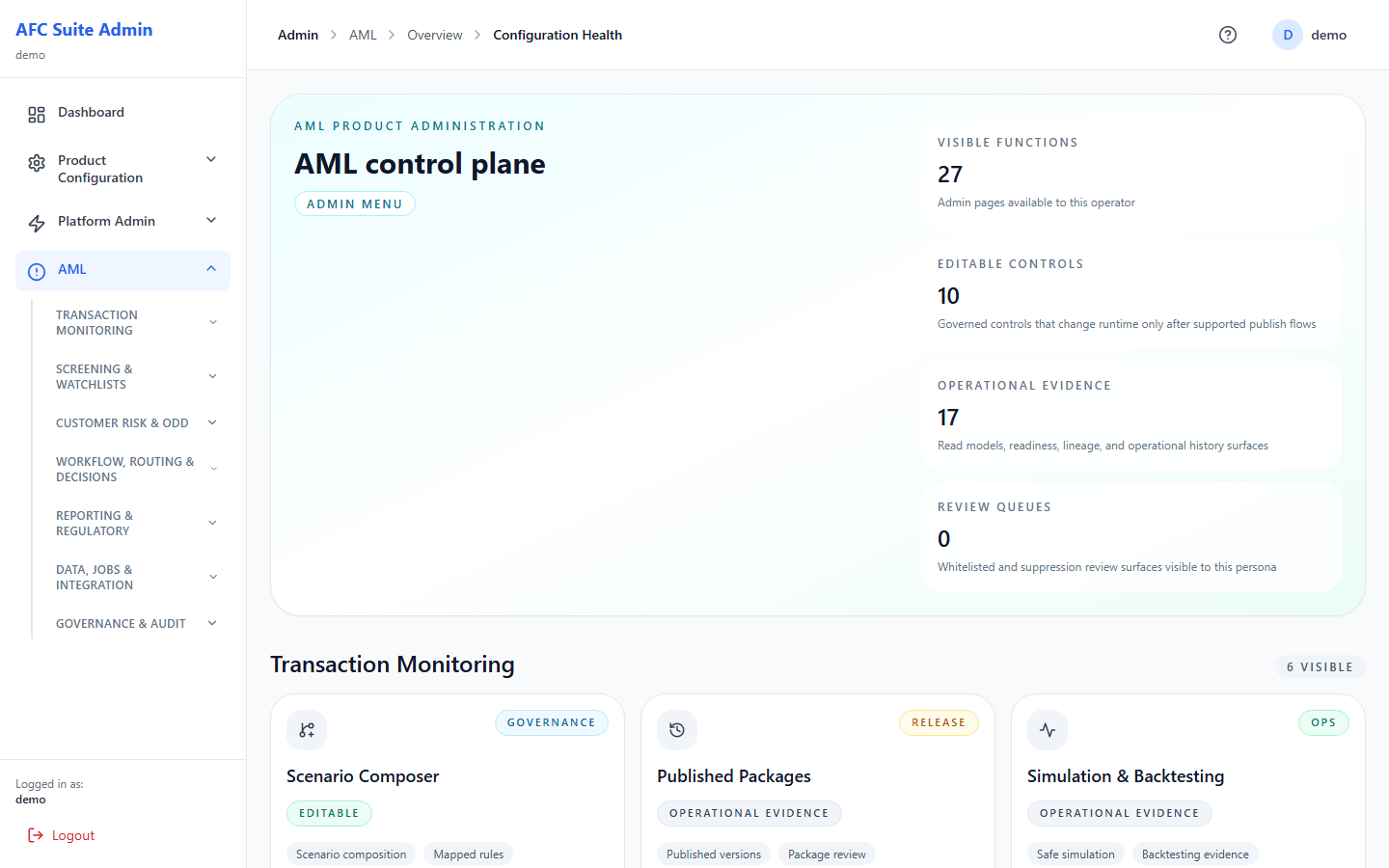
Operations workbench, customer and risk views, screening, alerts, cases, payment screening, transaction monitoring and governed reporting.

Implemented synthetic demonstration surfaces shown below

AFC TBML

Trade-package intake, document processing, TBML rules, compliance findings, alerts, cases, reporting and governed product configuration.

Represented through portfolio-safe product and architecture visuals

AFC UBO

Entity and person search, ownership tracing, AI-assisted research, report generation, workbench review actions and product administration.

Represented through portfolio-safe product and architecture visuals

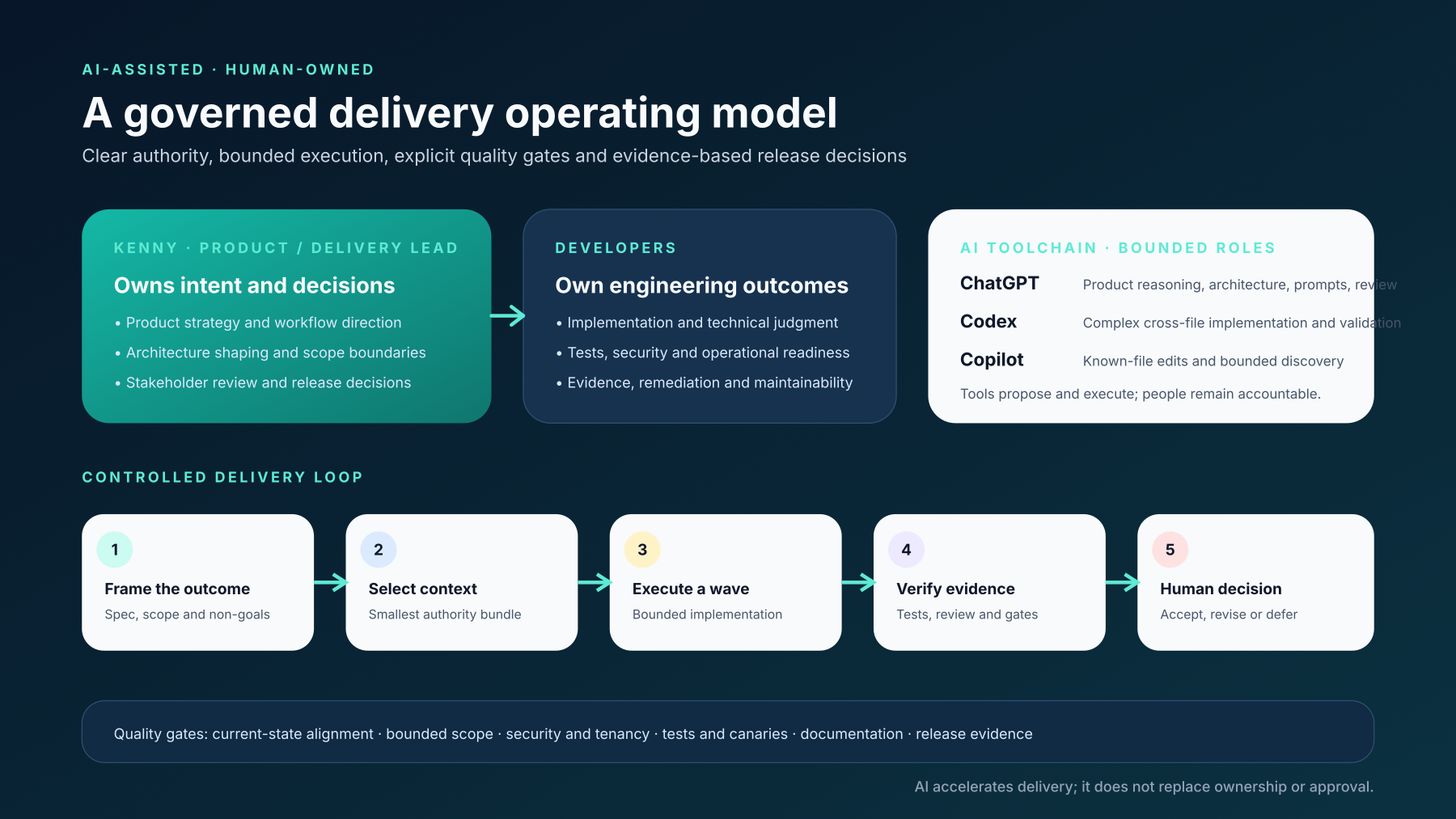
A product leader and software engineer used ChatGPT, Codex and GitHub Copilot within bounded roles, human review, automated testing, browser validation and evidence-based release gates.

Governed AI-assisted delivery operating model
Bounded tool roles, explicit human accountability and evidence-based release decisions.

Why this matters

“AI-native” is not a licence to remove judgement. The delivery model distinguishes exploration from implementation, and implementation from acceptance. AI outputs are reviewed against active specifications, security expectations, tests and browser evidence. Failed patterns feed back into rules, documentation and regression controls.

AI creates leverage. The operating model creates trust.

The current implementation uses a modular-monolith architecture: product modules keep their own domain models and decisions while consuming shared platform contracts.

High-level AFC Suite modular architecture
High-level architecture only. Internal endpoints, data models, security configuration and infrastructure details are not published.

The portfolio emphasises decision architecture rather than infrastructure inventory: where product autonomy is useful, where shared controls are mandatory, and how workflow, identity, audit and provider boundaries remain governable across modules.

The interface direction is built around a simple principle: dense operations need fast scanning, clear context and deliberate decision points.

G

Grid for volume

Use enterprise data grids for queues and high-volume operational work, with clear filters, density controls and prioritisation.

D

Drawer for preview

Provide fast context without forcing users to abandon the queue, preserving place and reducing navigation cost.

C

Cards for context

Use cards for recommended actions, exceptions and compact explanatory content — not as a replacement for operational data structures.

A

Sticky actions for speed

Keep high-frequency, high-consequence actions visible while making authority, status and validation requirements explicit.

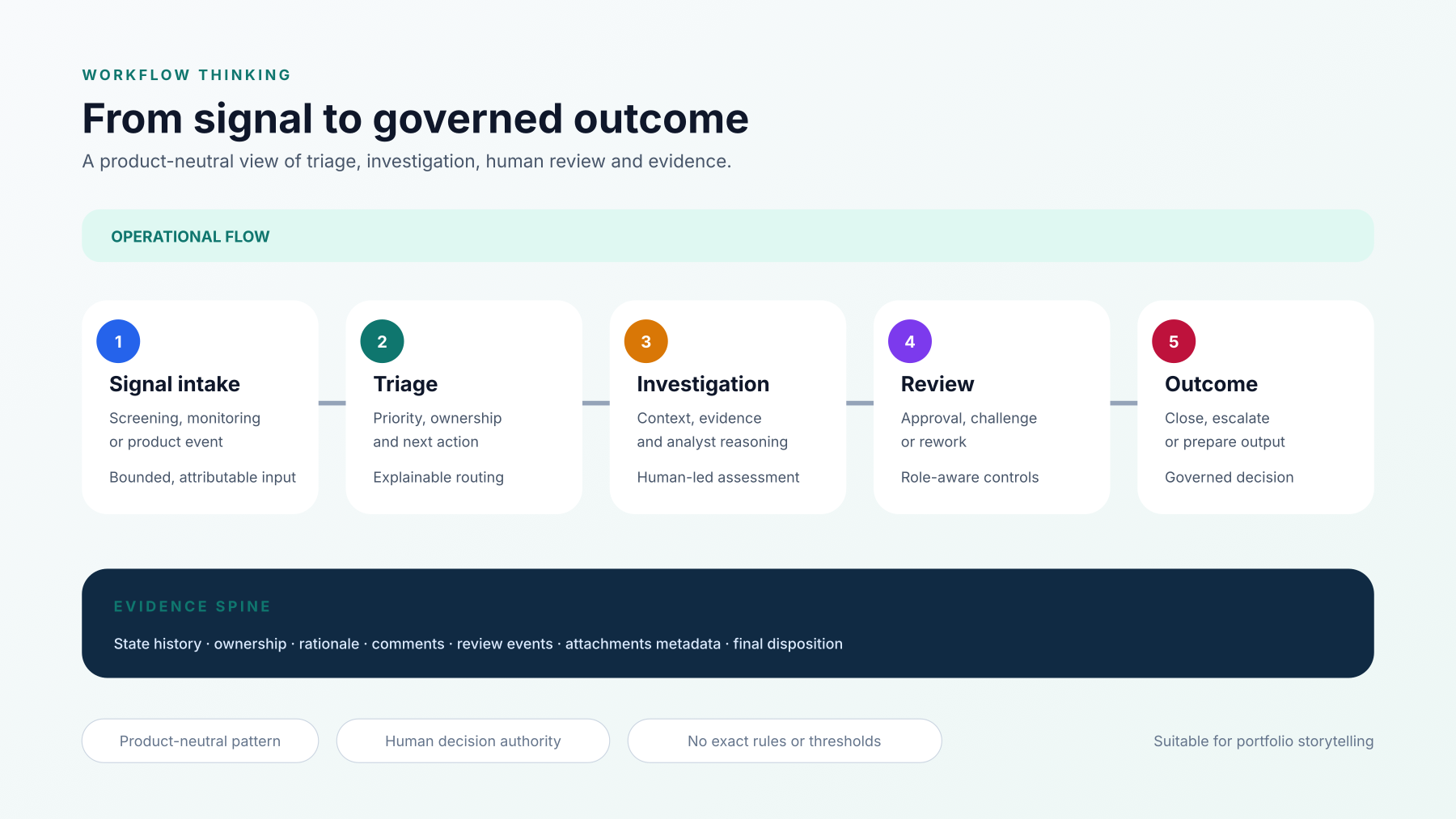
Workflow from signal intake through investigation and governed outcome
A product-neutral workflow concept showing triage, investigation, human review, outcome and evidence.

The AFC design system is a hybrid, specification-led and code-led practice. Written UX decisions, reusable front-end components and browser evidence form the implementation source of truth. This portfolio does not claim a Figma-led library where one was not the governing artefact.

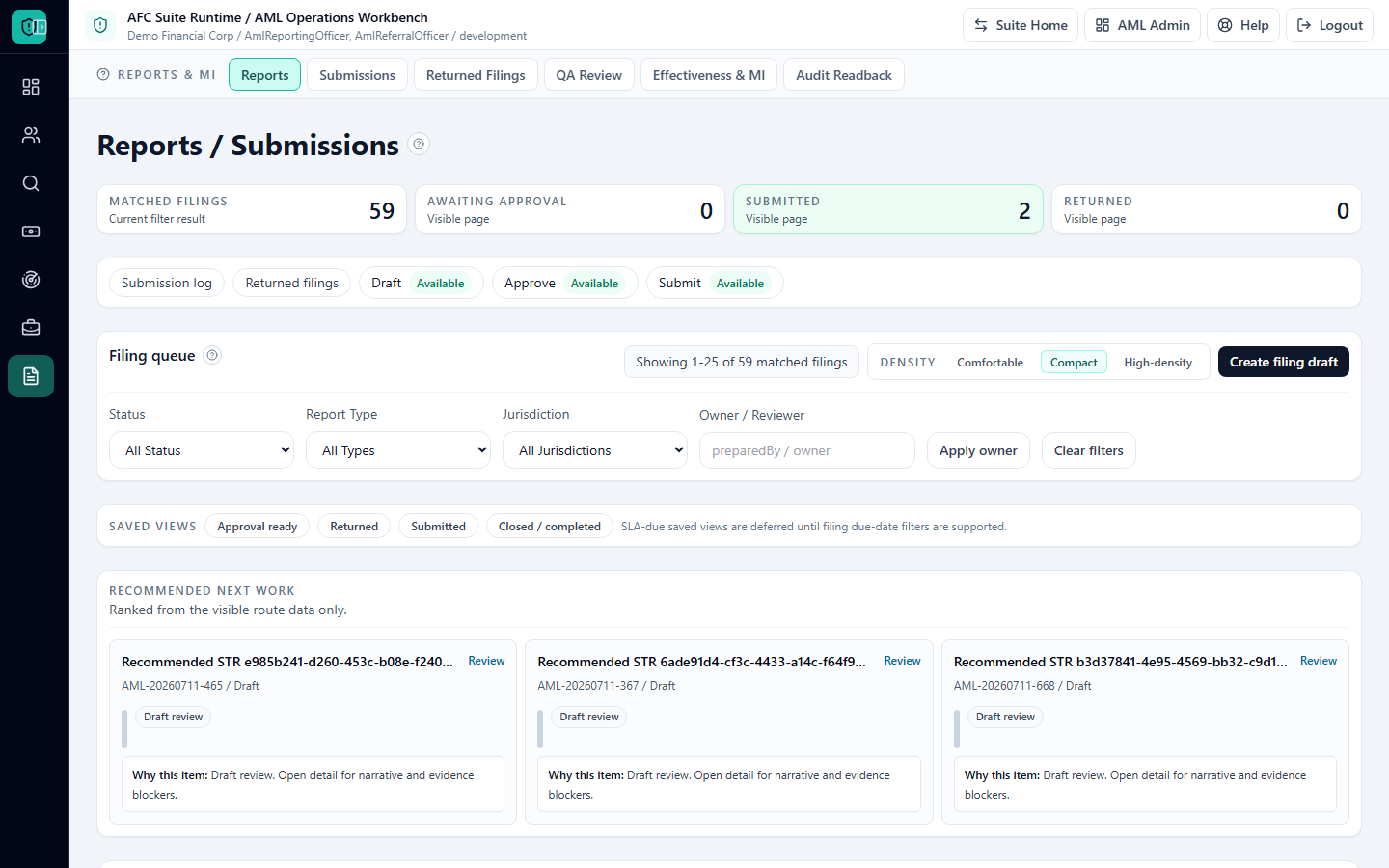
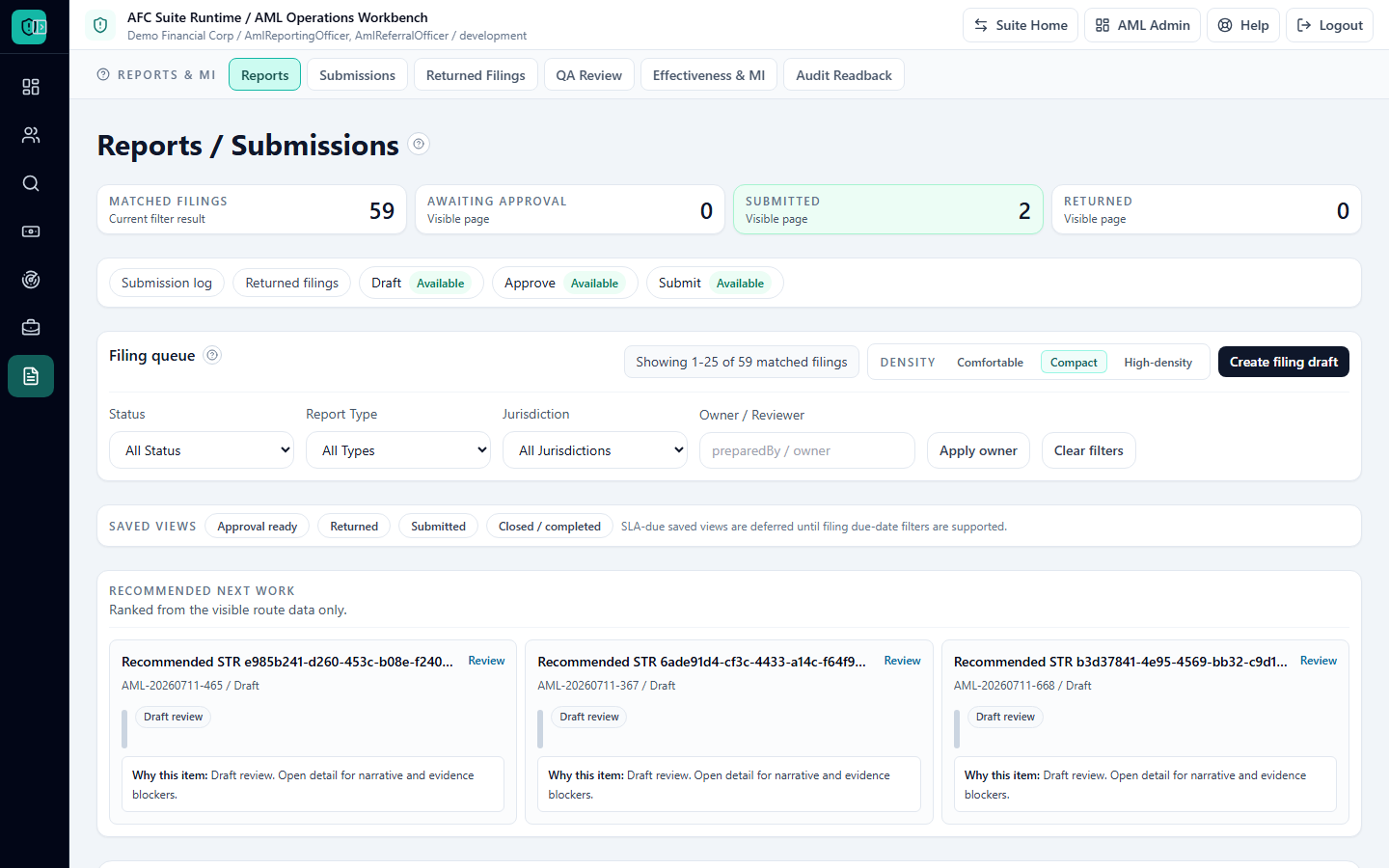
Reports workspace showing data grid, tabs and operational controls

Grid and workspace contract

Dense operational work uses a reusable grid-and-workspace pattern with filters, tabs, status context, density controls and guided actions.

Evidence: implemented synthetic screen
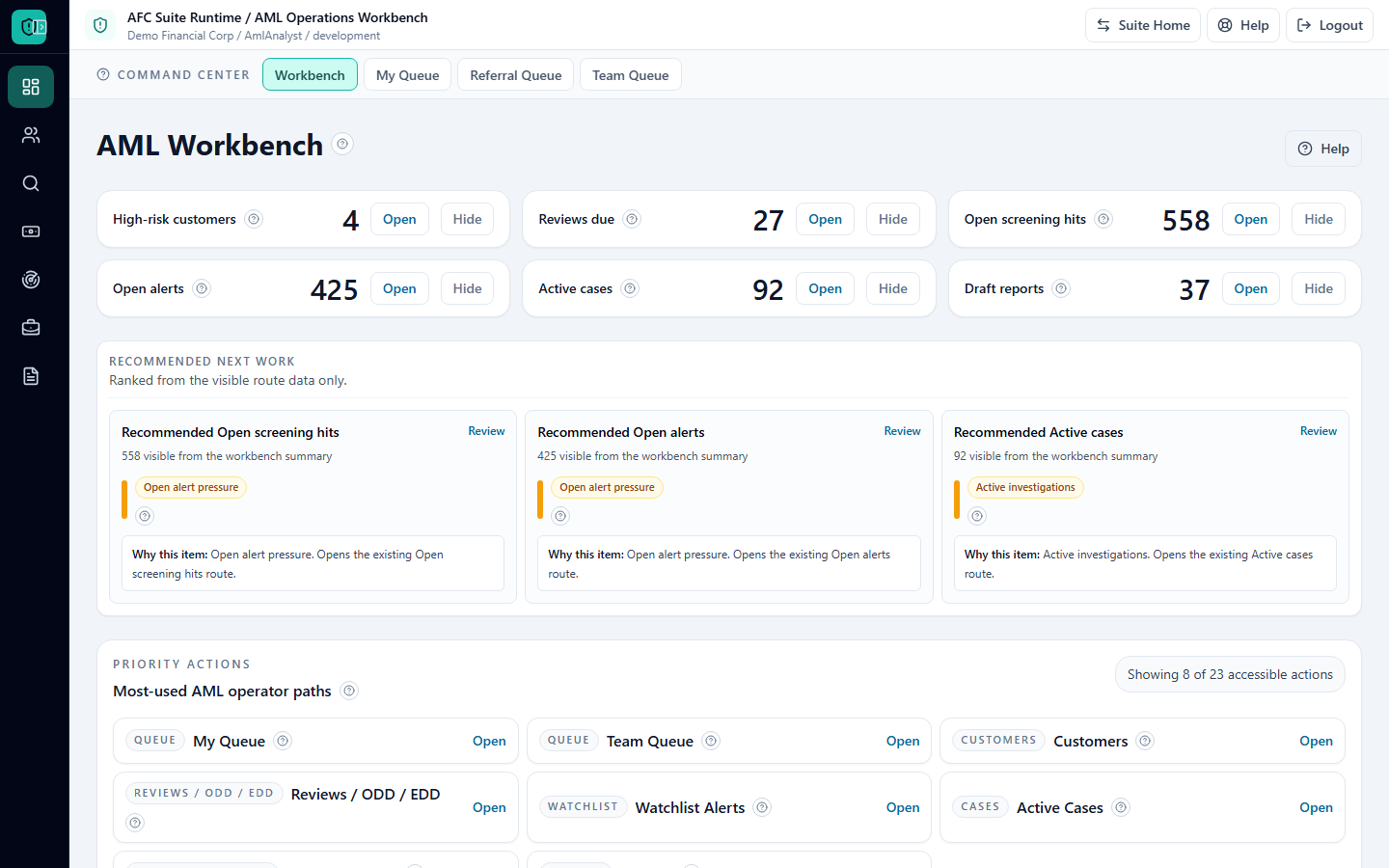
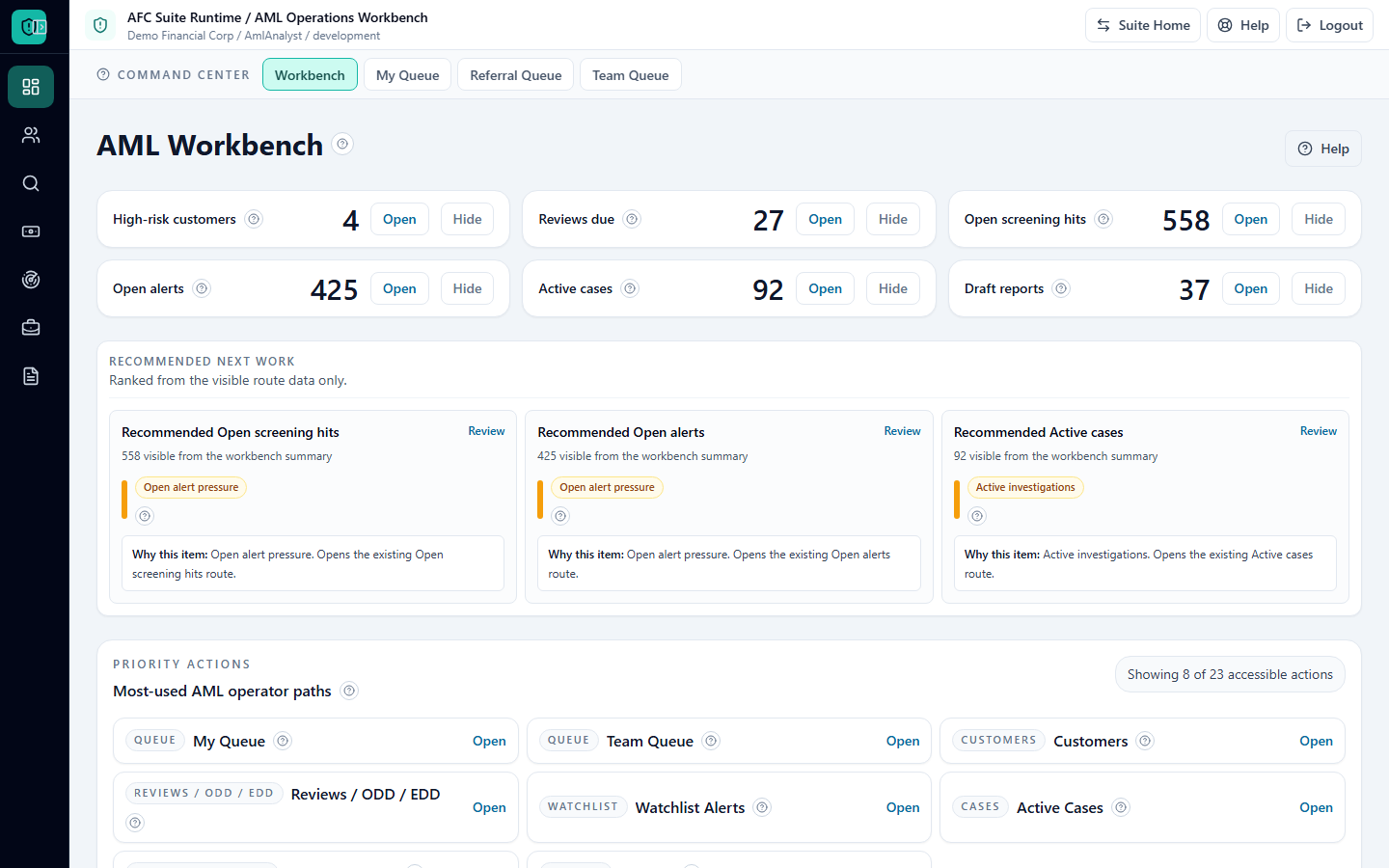
KPI strip and recommended priority cards

KPI and priority system

Operational signals are separated from recommended work so the user can scan state, understand urgency and act without losing context.

Evidence: reusable information hierarchy
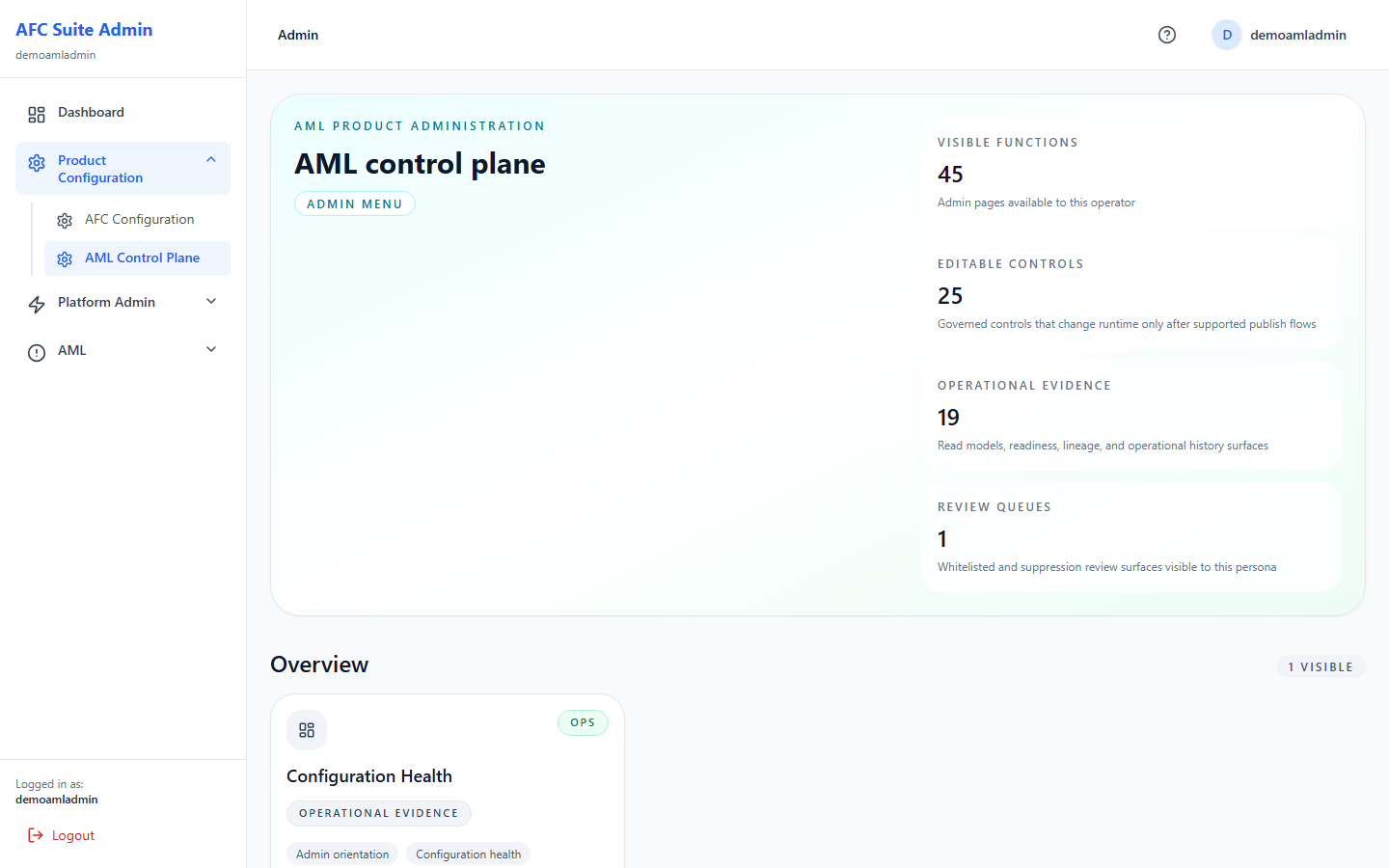
Tabs and workspace controls

Tabs, context and actions

Tabs organise depth, contextual controls preserve task focus and high-consequence actions remain visible without overwhelming the page.

Evidence: shared interaction pattern
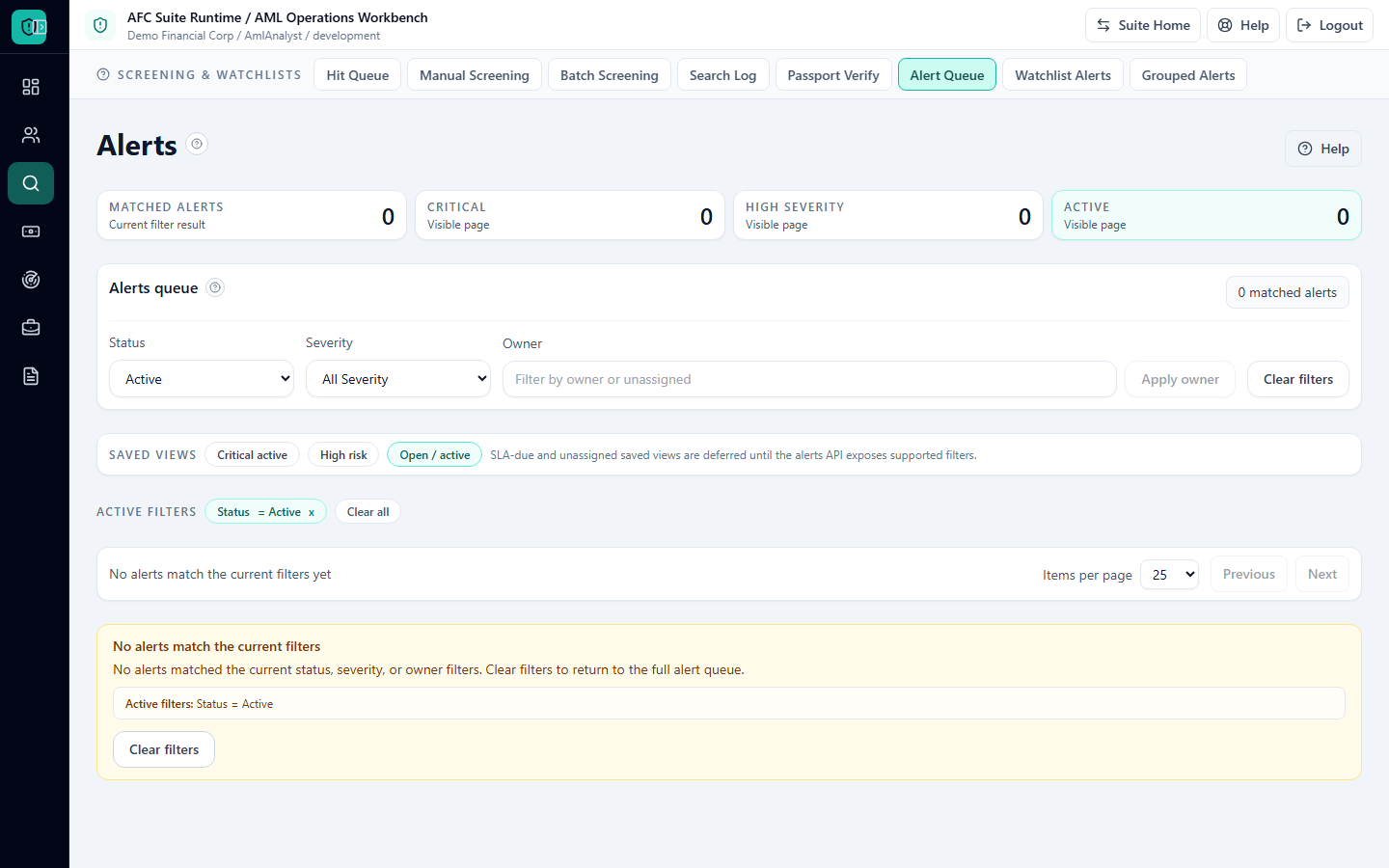
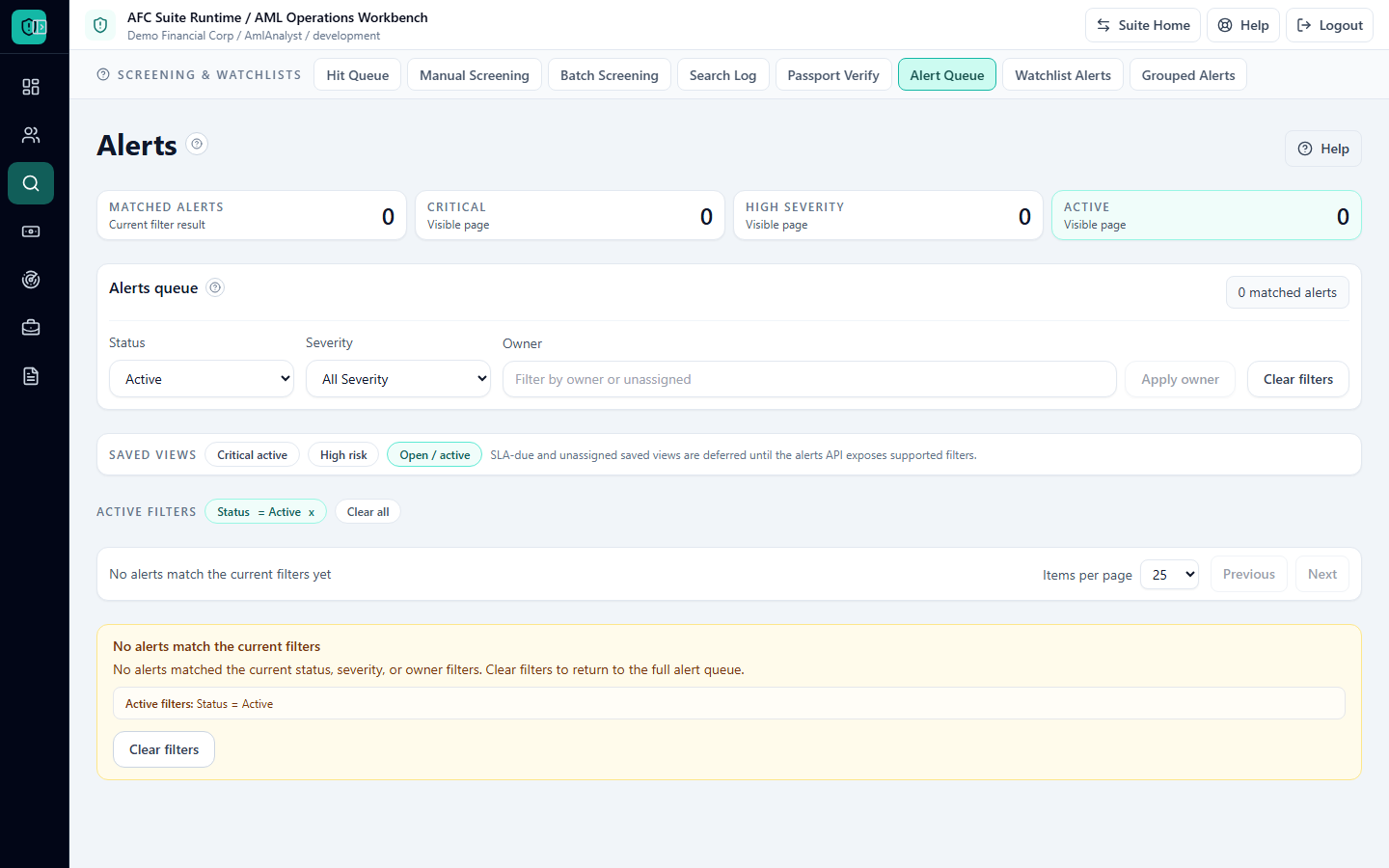
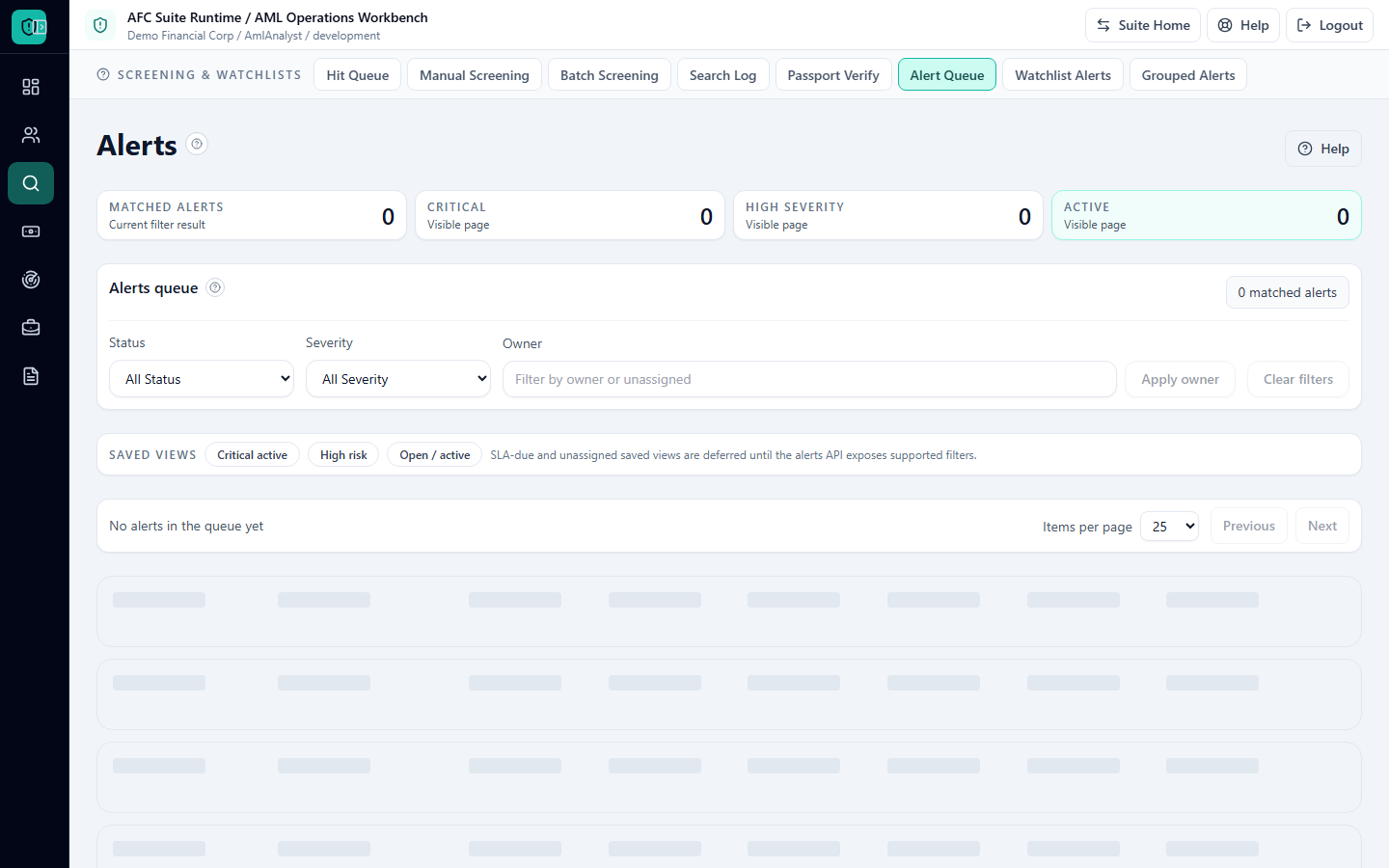
Empty state with recovery guidance

Operational states

Loading, empty, failure and permission states are designed as part of the component contract rather than treated as implementation afterthoughts.

Evidence: resilient workflow design
The component is not complete when the happy path renders. It is complete when hierarchy, states, permissions, data behaviour and browser evidence agree.

These images are selected to show information hierarchy, workflow controls, reusable patterns and operational states. Counts are interface state, not customer adoption, production volume or performance evidence.

This is a portfolio case study, not a sales assurance pack, regulatory attestation or production-readiness statement.

  • All images and demonstrations use synthetic data.
  • No customer identities, production data, confidential rules, security configuration or restricted infrastructure detail are disclosed.
  • TBML and UBO are represented through approved portfolio-safe visuals until neutral synthetic screenshots are available.
  • The live AML link demonstrates selected interface capabilities; it is not represented as a customer production environment.

Need someone who can connect domain complexity, product structure and AI-assisted delivery?

This case study reflects the way I work: model the system, make decisions explicit, build reusable patterns and require evidence before acceptance.